Hey there, sleep seekers!
Having trouble getting good sleep and looking for better sleep? Well, been there, done that. If you’ve ever wondered why sleep is so important and what is happening in your body and brain while you are sleeping, you’re at the right spot! Let’s dive into deep sleep, what happens in your body while you are snoozing and how you can improve your sleep and your energy.

Table of Contents
What is sleep?
We all know what sleep is, Right? Sleep is a natural, periodic state of rest and rejuvenation that is essential for maintaining overall health and well-being. During sleep, the body and mind undergo a series of complex processes that are crucial for physical repair, cognitive function, and emotional stability.
There are different aspects to sleeping:
- Biological process: Sleep is a biological process that involves a series of physiological and neurological changes. It is characterized by altered consciousness, reduced sensory activity, and inhibited voluntary muscle activity.
- Restorative state: While asleep, the body and brain are in a state of restoration. Sleep is divided into several stages, each serving distinct functions, including physical repair, memory consolidation, and emotional processing.
- Cyclical pattern: Sleep follows a cyclical pattern known as sleep cycles, which typically last about 90 minutes and include various stages: light sleep, deep sleep, and REM (Rapid Eye Movement) sleep. These cycles repeat several times throughout the night.
The functions of sleep
Sleep isn’t just a time for your body to rest—it’s a period of intense repair and rejuvenation. Understanding the science behind sleep can make its importance even clearer:
While you’re sleeping, your body is hard at work:
Physical restoration:
- Cell repair: During sleep, particularly in deep sleep stages, the body repairs tissues, muscles, and bones. Growth hormone is released, facilitating this repair process.
- Immune function: Sleep boosts the immune system, helping the body fight off infections and illnesses.
Cognitive function:
- Memory consolidation: Sleep plays a critical role in consolidating memories and learning. During REM sleep, the brain processes and organizes information acquired during the day. Your long-term memory and personality are formed at night while you are in your deep sleep.
- Learning and problem-solving: Adequate sleep improves cognitive functions such as attention, problem-solving, and decision-making. Your brain analyzes everything you did or said while you are sleeping. Sleeping makes you smarter!
Emotional regulation:
- Mood stability: Sleep helps regulate emotions and mood. Poor sleep is linked to increased irritability, stress, and a higher risk of mental health issues like anxiety and depression.
- Stress reduction: REM sleep, in particular, helps process and manage emotional experiences and stress.
Metabolic health:
- Appetite regulation: Sleep influences hormones that control appetite and metabolism. Disrupted sleep can lead to weight gain, increased risk of metabolic disorders, and higher cortisol levels.
- Energy balance: Proper sleep helps maintain energy levels and overall well-being.
- Hormonal balance: Sleep regulates the release of various hormones, including cortisol (which helps manage stress) and melatonin (which regulates sleep-wake cycles). Sleep disruptions can lead to hormonal imbalances that affect your overall health.
Sleep-Wake regulation
Your body has built-in systems around sleep. When you follow these your sleep will improve and your energy levels will be higher.
- Circadian rhythm: The body’s internal clock, known as the circadian rhythm, regulates sleep-wake cycles. It responds to environmental cues like light and darkness, helping to maintain a regular sleep pattern.
- Sleep homeostasis: This mechanism ensures that the body needs to sleep more after periods of sleep deprivation. The longer you stay awake, the stronger the drive to sleep becomes.
The stages of sleep
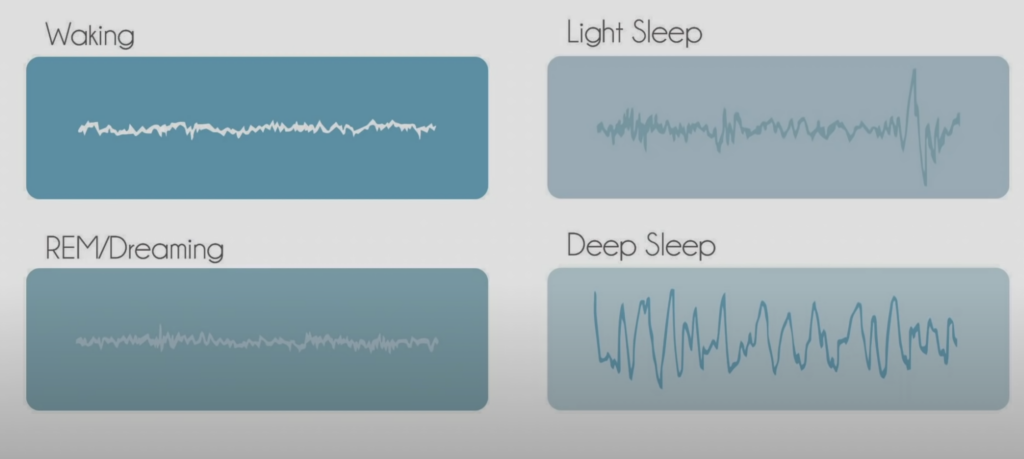
Going to sleep shouldn’t be seen as switching off the light switch and the lights are out for the rest of the night. Sleep is a complicated process with different stages.
- Waking: during the day you are awake.
- Light sleep: Includes stages 1 and 2 of non-REM sleep. It’s a transition phase from wakefulness to deeper sleep, characterized by gradual slowing of brain activity and body relaxation.
- REM sleep: Rapid Eye Movement sleep is characterized by increased brain activity, vivid dreaming, and eye movements. REM sleep is important for cognitive functions and emotional processing.
- Deep sleep: Stage 3 of non-REM sleep. This stage is crucial for physical restoration, growth, and immune function. It is characterized by slow brain waves and deep relaxation. Deep sleep is when your body recovers itself: it repairs cells and muscles and your brain converts all your interactions and thoughts into your long-term memory and personality. As you get older you will get less deep sleep, so deep sleep is seen as a big part of biological youth, that’s why deep sleep is also important
Why sleep matters
Investing in quality sleep offers a multitude of benefits:
- Health and well-being: Adequate sleep is essential for overall health, helping to prevent chronic diseases, support mental health, and maintain cognitive function.
- Quality of life: Good sleep improves mood, productivity, and quality of life. It enables better functioning in daily tasks and interactions.
- Longevity: Consistent, high-quality sleep is associated with a longer, healthier life. Chronic sleep deprivation is linked to various health issues and a reduced lifespan.
- Illnesses: Sleep deprivation enlarges your risk of several illnesses like Alzheimer’s, cardiovascular disease, strokes, and diabetes. So good sleep is important for your overall health.
- Enhanced cognitive function: Improved memory, better focus, and increased problem-solving abilities.
- Better mood: More stable emotions and reduced risk of depression and anxiety.
- Improved physical health: Stronger immune system, balanced hormones, and a lower risk of chronic diseases.
- Greater energy levels: Wake up feeling refreshed and ready to tackle the day.
Sleep deprivation gives us a poor mental status: poor sleep makes us make risky, rash decisions and is a drain on our capacity for empathy, it also makes us more sensible to our pain which makes it a hard time to relate to others.
Sleep deprivation makes us generally less happy, less healthy, and worse people.
How to Improve Your Sleep
Now that we understand why sleep is essential, let’s explore some practical tips to help you get better rest:
Day-tips
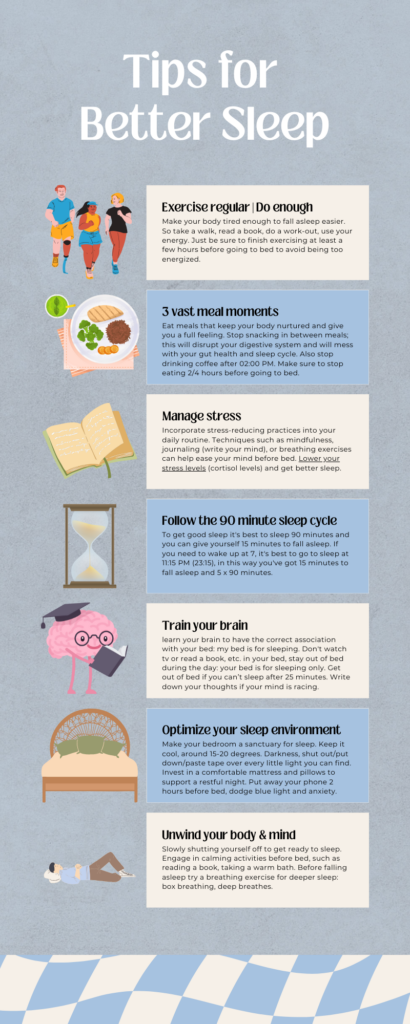
- Do enough: To have a good night’s sleep it is important to make your mind and body tired during the day. So take a walk, read a book, use your energy. In this way, your body will fall asleep easier. Do enough during the day, so you can be tired enough at night to sleep.
- Get regular exercise: Physical activity can improve sleep quality and help you fall asleep faster. Just be sure to finish exercising at least a few hours before bed to avoid being too energized.
- Create 3 vast meal moments: Create 3 vast meal moments with meals that keep your body nurtured and give you a full feeling. Stop snacking in between meals; this will disrupt your digestive system and will mess with your gut health and sleep cycles.
- Manage stress: Incorporate stress-reducing practices into your daily routine. Techniques such as mindfulness, journaling (write your mind), or breathing exercises can help ease your mind before bed. Lower your stress levels (cortisol levels) and get better sleep.
- No caffeine and alcohol: Stop drinking coffee after 02:00 PM (14:00), or else your hormones will be imbalanced and your sleep cycle will be disrupted. ALSO, don’t directly start your day with a cup of coffee when you wake up, let your cortisol do its own job; it’s better at 10:00 AM.
Night-time tips
- Limit eating & drinking: Don’t eat big meals or snacks before you go to bed. Stop eating at least 2-3 hours before bed. Else, your digestion and metabolism cycles are disrupted, which will disrupt your sleeping cycle.
- Put down your phone: The blue light from phones, tablets, and computers can interfere with melatonin production, making it harder to fall asleep. Next to this, Social Media can give you feelings of anxiety or negativity and put you in a overthinking state, which also makes it harder to fall asleep. Try to avoid screens at least 2-3 hours before bedtime.
- Mouth-taping: Start taping your mouth to get improved airflow (more oxygen), reduced snoring, better oral health, refined jawline and to feel more energized when you wake up. BE PRECAUTIOUS: don’t tape your whole mouth, use surgical tape (Amazon) vertically or use special mouth tape (Amazon).
- Breathing exercises: Before you go to sleep do a breathing exercise: Box breathing. Take a deep breath in for 5 seconds, hold your breath for 5 seconds, breathe out for 5 seconds, hold for 5 seconds, and repeat this cycle until you feel your body letting go of the tension in it and your heartbeat going slower: your body is getting ready to sleep. With this method, you will get deeper sleep and feel more energized.
General tips
- Train your brain: learn your brain to have the correct association with your bed: my bed is for sleeping. Don’t watch tv, read a book or listen to music in your bed, stay out of bed during the day: your bed is for sleeping only.
- Can’t sleep? Get out of bed or else your brain will make the association with laying awake with your bed. Walk it out and only go back to bed when you’re tired enough to sleep.
- A racing mind: Is your mind going 100 miles per hour? Try writing down the things you can’t seem to let go of, then you have physically given the thought a place, which can give you back a little peace of mind. Write it down on paper though, not on your phone!
- Create a sleep schedule: Go to bed and wake up at the same time every day, even on weekends. Consistency reinforces your body’s natural sleep-wake cycle. Follow your circadian cycle and your cortisol levels.
- Follow the 90 minutes sleep cycle: To get good sleep it’s best to sleep 90 minutes and you can give yourself 15 minutes to fall asleep. If you need to wake up at 7, it’s best to go to sleep at 11:15 PM (23:15), in this way you’ve got 15 minutes to fall asleep and 5 x 90 minutes. Find yours.
- Optimize your sleep environment: Make your bedroom a sanctuary for sleep.
Keep it cool, around 15-20 degrees.
Darkness, shut out/put down/paste tape over every little light you can find.
Invest in a comfortable mattress and pillows to support a restful night. - Relaxing bedtime routine: Unwind your mind and body, see this as slowly shutting yourself off to get ready to sleep. Engage in calming activities before bed, such as reading a book, taking a warm bath, or practicing relaxation techniques like deep breathing or meditation.
My sleeping journey
Well, this is everything I’ve got on getting better sleep. Throughout my life sleep has been a difficult thing for me. I tried staying awake, I tried sleeping pills and a bunch of other things, but now I feel like I’m getting closer to getting the best sleep with all these stretegies.
Even with my improved sleep, I still face challenges. There are nights when my mind races with anxious thoughts or crazy ideas or when things like noise disrupt my rest. I’ve learned that it’s normal to have off nights, and it’s essential to be kind to myself during these times.
What I’ve also learned through this journey is that improving sleep is a continual process. The strategies I’ve implemented have made a significant difference, but I still struggle sometimes.
When that happens, I remind myself of the progress I’ve made and that there is always the next night to get better sleep.
In essence, good sleep is a cornerstone of overall health and well-being. By prioritizing your sleep and incorporating these tips, you’ll be setting yourself up for a more vibrant, productive, and fulfilling life.
Note to yourself: Remember, getting better sleep is a long process that needs dedication, consistency, and changes in your lifestyle. Don’t expect to see big changes in 1 night or even in 2 weeks; fixing your sleeping habits can take up to 6-12 weeks. So stay consistent and get some good sleep!
Sweet dreams, and here’s to your journey towards better sleep!
Sleep well!
With love,
CECA
C’est ca ~ That’s it
P.S. If you want to learn more on better sleep, read this article about how you can lower your cortisol levels and also get better sleep.
WATCH LIST:
- 6 tips for better sleep | Sleeping with Science, a TED series
- How to Lower Cortisol and Fix Your Sleep: Circadian Rhythm, Cortisol, and Sleep – Dr. Berg
- The brain benefits of deep sleep — and how to get more of it | Dan Gartenberg
- One more reason to get a good night’s sleep | Jeff Iliff
- Sleep Is Your Superpower | Matt Walker | TED