
Oral health is often overlooked in the hustle and bustle of daily life, yet it plays a crucial role in our overall well-being. To get better oral hygiene is important for your overall health and well-being. From preventing disease to boosting self-confidence, maintaining good oral hygiene is essential for a healthy, happy life. You’ll explore why oral health is important, how to improve it, and how to establish a routine that works for you. I’ll also discuss the consequences of neglecting your oral health and how you can avoid these pitfalls.
Table of Contents
Why is better oral hygiene important?
Oral health goes beyond just having a bright smile. Here’s why it should be a top priority:
- Disease prevention: Good oral hygiene helps prevent the development of dental issues such as cavities, gum disease, tonsil stones and infections. These conditions can cause pain, discomfort, bad breath and lead to more serious health problems if left untreated.
- Aesthetic and self-esteem: Your smile is one of the first things people notice. Maintaining good oral health contributes to a more attractive white smile, which can positively impact your self-esteem and social interactions. Also, it’s good for your self-love and confidence.
- Functional benefits: Healthy teeth and gums are essential for proper chewing and speaking. Dental problems can interfere with these functions and affect your quality of life.
- Systemic health connection: Poor oral health has been linked to various systemic diseases, including heart disease, diabetes, and respiratory infections. Bacteria from gum disease can enter the bloodstream and affect other organs, emphasizing the need for proper oral care.
Understanding bacterial colonization in the mouth
“Our mouth is home to a diverse community of bacteria, some essential for digesting food particles left between our teeth and gums. However, when these bacteria feed, they release waste products. These waste materials can produce a foul odor, contributing to what we experience as bad breath or halitosis.”
The mouth is a complex environment teeming with various bacteria. These bacteria form biofilms, particularly on the teeth, gums, and tongue. Here’s how bacterial colonization works in the oral cavity:
- Initial colonization:
- At birth: When you’re born, your mouth is initially sterile. However, as you begin to interact with your environment, bacteria start to enter your mouth.
- Primary colonizers: The first bacteria to establish themselves are often non-pathogenic species like Streptococcus and Actinomyces. These bacteria adhere to the tooth surfaces and provide a foundation for other bacteria.
- Formation of biofilms:
- Plaque formation: Bacteria form a sticky, colorless film on your teeth known as dental plaque. This biofilm provides a habitat for further bacterial growth and can be difficult to remove without regular brushing and flossing.
- Biofilm complexity: As plaque matures, it becomes more complex with a diverse range of bacterial species. This biofilm can be organized into different layers, with varying bacterial species occupying different niches.
- Bacterial diversity:
- Different regions: Different areas of the mouth host distinct bacterial communities. For example, the gum line, tongue, and the space between teeth each have unique bacterial populations due to differences in moisture, pH, and food particles.
- Balance of bacteria: A healthy mouth has a balanced mix of bacteria. When the balance is disrupted, harmful bacteria can proliferate, leading to dental issues such as cavities and gum disease.
- Nutrient availability:
- Diet influence: The types of food you eat can influence the types of bacteria that thrive in your mouth. Sugary and starchy foods provide fuel for bacteria that produce acids, leading to tooth decay.
- Saliva role: Saliva helps flush away food particles and bacteria, but its effectiveness can be influenced by hydration levels and overall health.
Key Roles of Oral Bacteria
- Protective bacteria:
- Prevention of pathogens: Some bacteria in the mouth are beneficial and help prevent harmful bacteria from colonizing. They compete for resources and produce substances that inhibit pathogenic bacteria.
- Disease-causing bacteria:
- Pathogens: Certain bacteria, like Porphyromonas gingivalis and Streptococcus mutans, are associated with oral diseases. S. mutans contributes to tooth decay by producing acids that erode tooth enamel, while P. gingivalis is linked to gum disease.
- Biofilm dynamics:
- Plaque development: The development and maintenance of plaque biofilms involve interactions between various bacterial species. As plaque accumulates, it can harden into tartar, which is difficult to remove without professional dental cleaning.
Understanding the dynamics of bacterial colonization in your mouth is crucial for maintaining good oral health. By practicing good oral hygiene, maintaining a balanced diet, and visiting your dentist regularly, you can manage the bacterial environment in your mouth and prevent oral health problems.
How to create better oral health
Improving your oral health involves more than just brushing and flossing. Here are key practices to incorporate into your daily routine:
Brush regularly and properly:
- Frequency: Brush your teeth at least twice a day—once in the morning and once before bed.
- Technique: Use a soft-bristled toothbrush and fluoride toothpaste. Brush for at least two minutes, covering all surfaces of your teeth. Pay special attention to the gum line and the backs of your teeth.
- Replacement: Change your toothbrush every 3-4 months or sooner if the bristles become frayed.
The best electric toothbrush I’ve ever used is the one from Oral-B (no sponsor): Oral-B IQ
Pick your teeth:
- Picking your teeth will help maintain your gum health: you’re removing food scraps, which will prevent it from rotting and growing bacteria. In this way the “poop” (waste) of the bacteria will be taken away.
- This may cause some bleeding, that’s because your gum is infected. You can simply fix this by flossing and picking your gumline for two weeks.
Floss daily:
- Flossing removes plaque and food particles from between your teeth and under the gumline, areas that a toothbrush can’t reach. Aim to floss at least once a day.
Clean your tongue:
- Tool: Use a tongue scraper or your toothbrush to gently clean your tongue. This helps remove bacteria and can reduce bad breath.
Mouth-taping at night
- Mouth-tape your mouth while you’re sleeping to avoid sleeping with your mouth open, which is disadvantageous for your oral health. Mouth-taping has other benefits like feeling more energized in the morning, getting a better jawline, reducing dryness in your mouth, training yourself to breath through your nose, which is advantageous for your overall health.
- Ensure the tape used is gentle on the skin and does not cause discomfort. There are specific tapes on Amazon designed for this purpose that are less likely to irritate.
- Before starting mouth taping, learn how to safely mouth-tape.
Use mouthwash:
- Mouthwash can help reduce plaque, prevent gingivitis, and kill bacteria that cause bad breath. Choose an alcohol-free mouthwash to avoid drying out your mouth and to avoid killing the good bacteria
- Coconut oil is a good natural replacer for mouthwash and it could also brightens your teeth.
Maintain a balanced diet & hydrate:
- Focus on: Fruits, vegetables, whole grains, and lean proteins. These foods provide essential nutrients that support oral health.
- Avoid excessive sugar: Limit sugary snacks and drinks, which can lead to cavities. Opt for water or milk instead of sugary beverages.
- Hydration: Water helps wash away food particles and bacteria. Drinking fluoridated water can also help strengthen teeth.
- Include tooth-friendly foods: Crunchy vegetables like carrots and celery, dairy products like cheese, and foods high in vitamin C, such as oranges and strawberries.
Avoid tobacco products:
- Smoking and chewing tobacco increase the risk of gum disease, oral cancer, and bad breath. Quitting tobacco can greatly improve your oral health and overall health.
Protect your teeth:
- If you play sports or grind your teeth, consider using a mouthguard to protect against injury and enamel wear.
Visit your dentist regularly:
- Schedule dental check-ups and cleanings every six months. Your dentist can detect early signs of dental problems and provide professional cleaning to remove tartar build-up.
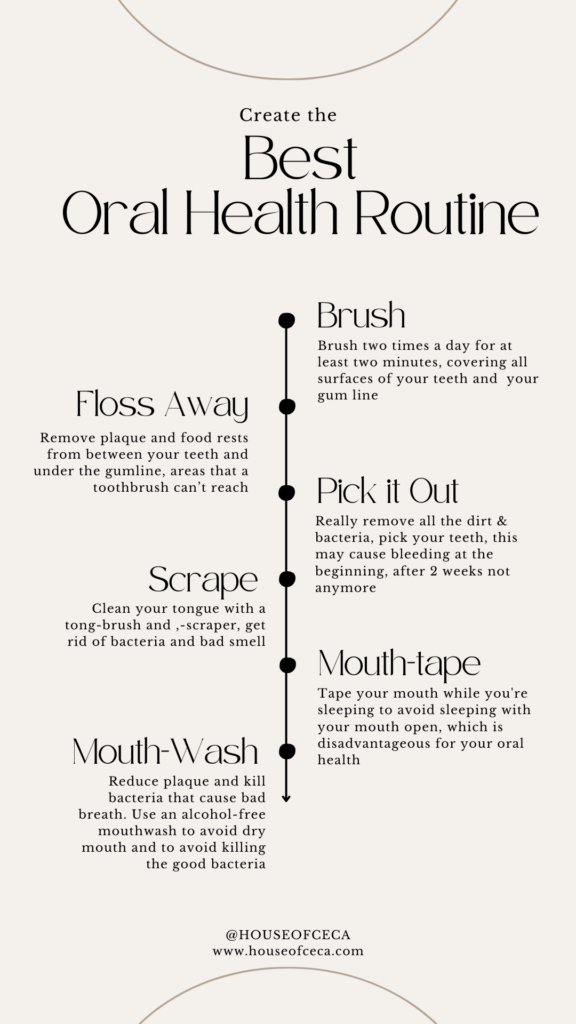
The best 5-step routine
Repeat the 5-step routine two times per day, in the morning after breakfast and before you go to bed.
How to follow your oral health routine
Establishing a consistent oral health routine is key to maintaining a healthy mouth.
Also, see taking care of your oral health as a way of self-love to make it easier to start creating a routine.
Here’s a simple guide to help you get started:
- Set reminders: Use phone alarms or apps to remind you to brush and floss regularly. Consistency is crucial for forming lasting habits.
- Organize your supplies: Keep your toothbrush, toothpaste, floss, and mouthwash in an easily accessible place. Consider using a designated oral care caddy or holder.
- Track your progress: Take weekly pictures of your teeth, maintain a journal, or use a habit-tracking app to monitor your brushing, flossing, and dental visits. This can help you stay motivated and on track.
- Involve your family: Encourage family members to join you in maintaining good oral hygiene. Setting a routine together can make the process more enjoyable and effective.
What Happens When You Don’t Take Care of Your Oral Health?
Neglecting oral hygiene can lead to several serious consequences:
- Cavities and tooth decay: Without proper brushing and flossing, plaque builds up and can lead to cavities and decay, potentially requiring fillings or even extractions.
- Gum disease: Plaque buildup can also cause gum inflammation, leading to gingivitis and, if untreated, periodontitis. Gum disease can result in tooth loss and has been linked to other health issues.
- Bad breath: Poor oral hygiene often results in persistent bad breath, which can affect your confidence and social interactions.
- Systemic health issues: As mentioned, oral health problems can contribute to systemic diseases like heart disease and diabetes, creating a ripple effect on your overall health.
- Pain and discomfort: Dental problems can cause significant pain, discomfort, and difficulty eating, impacting your daily life and well-being.
My recommendations:
Here’s a list of products I like to use.
- Electrical toothbrush:Oral-B iO Series 8 Rechargeable Electric Toothbrush with Visible Pressure Sensor to Protect Gums, 2 Min Timer, 6 Cleaning Settings, 3 Replacement Toothbrush Heads, and Travel Case, Black, (Amazon)
- Mouth-tape: Gentle Transparent White Tape 90 Pcs – Hypoallergenic Tape for Sensitive Skin, Painless Removal, Breathable Comfortable to Exercise (Amazon)
- Tongue brush & scraper in one: Orabrush Tongue Cleaner Helps Fight Bad Breath, 1 Count (Pack of 2) (Amazon)
- Tooth picks: GUM Soft-Picks Original, Easy to Use Dental Picks for Teeth Cleaning and Gum Health, Disposable Interdental Brushes with Convenient Carry Case, Dentist Recommended Dental Picks, 320ct (Amazon)
- Floss picks: The Humble Co. Floss Picks (200 Count) – Plant Based Dental Floss Picks for Superior Oral Care, Dental Hygiene, and Gum Health, Cruelty Free Tooth Floss Picks (Charcoal, Double Thread) (Amazon)
Prioritizing your oral health is a great aspect of maintaining overall well-being. By incorporating effective practices into your daily routine, you can prevent dental issues, brighten your smile, and safeguard your systemic health. Developing a consistent oral care routine not only benefits your teeth and gums but also contributes to your overall quality of life.
Don’t underestimate the power of good oral hygiene—your future self will thank you for it!
With love,
CECA
C’est ca ~ That’s it