Hey there!
Ready to level up in the self-improvement game? Being confident is a great step! Let’s dive into the world of assertiveness and self-growth. It’s like your personal cheat code for better decision-making, boosted confidence, and living authentically. Grab a comfy seat, and let’s get started!
Table of Contents
What is assertiveness, anyway?
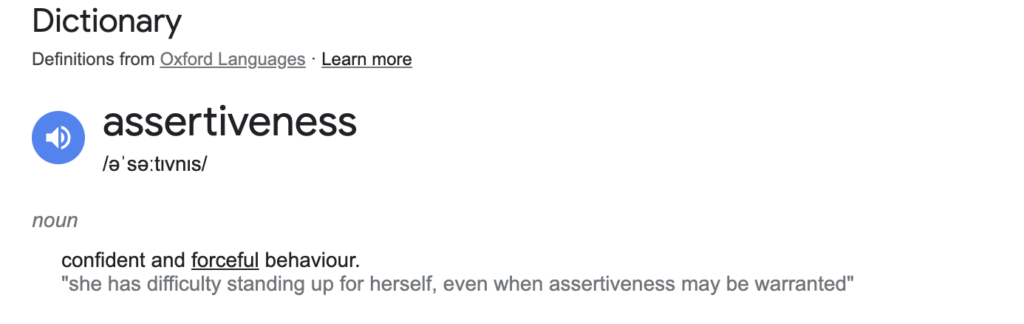
First off, let’s talk assertiveness. In simple terms, it’s about expressing your thoughts, feelings, and needs openly and honestly while respecting others. It’s not about being bossy or timid—it’s about finding that sweet spot where you can express your needs and desires honestly while still treating others with respect. Assertiveness means you can say, “I need this” without sounding demanding or disrespectful. It’s your ticket to better relationships and a healthier self-esteem.
Speaking up: get what you want
Sometimes you should speak up, but then you don’t and sometimes you speak up and then you shouldn’t. We all have a range of accepted behavior, this lays within your range, outside of these you are either being too weak or too strong.
But what determines this range? Your power determines your range. What is power? Power has a lot of forms; having alternatives (a lack or a surplus; the one with the surplus has power), being new (loads of experience or zero experience) and a lot of different forms.
So, if you have lots of power, you have a big range. To expand your range you have to be powerful in your own eyes; if you are powerful in your own eyes, you will be powerful in someone else’s eyes. When other people see you as powerful, they grant/give you a wider range.
So you need tools (Adam Galinsky) to expand your range of acceptable behavior. Speaking up is risky, but these tools will lower your risk of speaking up.
- Negotiations: On average women tend to get worse outcomes than men at the bargaining table. But when women advocate for others they get the same results as men (the mama bear effect). When we, as humans, defend/advocate for others, we can discover our own voice. But we have to advocate for ourselves. To advocate for ourselves we should use perspective taking: looking at the world through the eyes of another. When you take someone’s perspective it allows us to be ambitious, assertive, but still likeable
- Signal flexibility: When you give someone options; it lowers their defenses, in this way they feel they control the situation and they’re more likely to accept your offer and give you what you want.
- Gain allies: people feel more confident when they have support in their audience, get allies. How do you get allies on your side? Be a mama bear, if you gain power in your own eyes, you gain power in other’s eyes. Also, start asking others for advice: when you ask someone for advice, they like us because we flatter them and we’re expressing humility. Ask for advice on your accomplishments, this will make you look humble.
- Show expertise: expertise gives us credibility, when we have high power, we already have credibility. We only need good evidence. When we lack power, we don’t have the credebility. We need excellent evidence. If you want to come off as an expert, you have to tap into passion; show you’re passionate. You need to make your eyes get lit up and big, smile a big beaming smile use your hands all over, talk quickly with a little higher pitch, lean in as if you’re telling them a secret. When you tap into your passion, you will also make the other person passionate. Tapping into your passion even works when we come off as too weak. If you condemn your strong emotions as passion, you will even gain credibility for crying or for getting mad.
You will expand your range of acceptable behavior and your days will be most joyful. So when a scene calls for it, be a ferocious mama bear and a humble advice seeker. Have excellent evidence and strong allies. Be a passionate perspective taker.
Be seen as assertive & powerful
If you want to be perceived as assertive and powerful, you have to stop being overly polite, says Bruce Lambert, PhD.
Stop beating around the bush: are you sure you want X, Maybe Z is the better option?” Turn this into: “I think Z is the better option to go with.”
Be direct. Say it as directly as you possibly can. No hedging, no indirectness, no beating around the bush, no apologies. Think about the thing you want to say and say it in the most unvarnished, unadorned way you possibly can.
That is the most powerful way to say it. So the less politeness you use, the more powerful you will be received. Don’t use verbal deference: don’t be overly polite.
However, this doesn’t mean be rude, be profane, or obscene, or inappropriate. It just means no hedging, no indirectness, no beating around the bush, no apologies.
Just say what you want to say and say it strong & proud.
How to be assertive: the basics
- Use “I” Statements: Instead of pointing fingers, say things like, “I feel” or “I need.” For example, “I feel overwhelmed when deadlines are unclear” is better than “You never give clear deadlines.”
- Be Clear and Direct: Say what you mean without beating around the bush. Avoid vague language and get straight to the point.
- Practice Active Listening: Show you’re genuinely interested in what others have to say. This isn’t just about hearing them but understanding their perspective.
- Stay Calm: Keep your tone steady and your body language open. Good posture and eye contact make your message stronger.
Confident and forceful behavior: finding your inner power
Being confident and forceful doesn’t mean being overbearing; it’s about asserting yourself effectively. Here’s how to do it:
- Know Your Worth: Recognize your strengths and abilities. Confidence starts with acknowledging what you bring to the table.
- Prepare and Practice: Whether you’re speaking up in a meeting or confronting an issue, preparation can make a huge difference. Practice what you want to say to feel more in control.
- Be Decisive: Make decisions promptly. Hesitation can undermine your confidence, so trust your judgment and stick with it.
- Stay Grounded: Avoid getting defensive or emotional. Stick to the facts and focus on the issue, not personal feelings.
Making choices like a pro
Ever feel paralyzed by choices? You’re not alone! The key to making decisions more easily is to trust your instincts and clarify your values.
Here’s a nifty trick: when faced with a decision, ask yourself, “Does this align with my long-term goals?” If yes, go for it. If no, consider whether it’s worth the temporary compromise.
Remember, not every choice has to be perfect, but staying true to your core values can simplify things.
Decision-making can be a drag, but it doesn’t have to be. Here’s how to streamline the process:
- Identify Your Priorities: Know what’s most important to you. This helps filter out options that don’t align with your values.
- Break It Down: Simplify choices into smaller steps. Instead of deciding on a massive project all at once, tackle it piece by piece.
- Set Deadlines: Give yourself a timeframe to make a decision. Procrastination only leads to more stress.
- Trust Your Gut: Sometimes, your intuition knows best. If something feels right or wrong, don’t ignore that inner voice.
Boosting Your Confidence
Confidence isn’t about being perfect; it’s about believing in your ability to handle whatever comes your way.
How to start feeling confident, you ask? Just start, be confident, see it as though you are worthy of your own confidence, fake it til you make it. Start acting confident & do what you want to do & be who you are.
People are way too busy with themselves, so there is no reason to not be confident. People only care about themselves.
Do you want to know how I found out? I just do crazy stuff in public and I noticed that nobody really cares. I walked around with a childish bunny crown and no one really cared, sure they looked funny for a 0.1 second, but they will never remember me. Also, I dance and sing (ironically) in public often, sometimes I’m quite scared to do this, but when I do it (without really noticing it), people don’t really seem to care.
So just be yourself, no one really cares, this should make you feel free.
Start by setting small, achievable goals and celebrating each win. It’s like stacking building blocks of self-belief.
Surround yourself with positive influences and practice self-compassion. When you stumble (and you will), treat yourself with the same kindness you’d offer a friend.
Confidence isn’t just a feeling—it’s something you build over time. Here’s how to give it a boost:
- Celebrate Small Wins: Every achievement, big or small, counts. Recognize and reward yourself for progress.
- Challenge Negative Thoughts: Replace self-doubt with positive affirmations. Remind yourself of your past successes and strengths.
- Embrace Learning: Growth comes from experience. Don’t be afraid to step out of your comfort zone and learn new things.
- Surround Yourself with Positivity: Connect with people who support and uplift you. Positive relationships can fuel your confidence.
How to Truly Be Yourself
Being yourself sounds simple, but it’s a journey. Start by exploring what makes you tick—your passions, quirks, and values. Embrace them unapologetically.
It’s about shedding the “shoulds” and focusing on what genuinely resonates with you. Don’t be afraid to show your true colors, even if they’re a bit unconventional. Authenticity attracts the right people and opportunities into your life.
Being authentic means living in a way that’s true to who you are. Here’s how to embrace your true self:
- Know Your Values: Understand what matters most to you and make choices that reflect these values.
- Own Your Uniqueness: Your quirks and individual traits make you special. Embrace them rather than conforming to others’ expectations.
- Let Go of Perfection: No one’s perfect, and that’s okay. Accept your flaws as part of your authentic self.
Invisibility: your greatest super power.
Another good lesson:
Giving Zero Fucks (Responsibly!)
Now, let’s talk about giving zero fucks. It’s not about being reckless or dismissive but rather about letting go of what doesn’t serve you.
Focus on what matters to you and don’t sweat the small stuff. Remember, you can’t control other people’s opinions, so why stress over them? Prioritize your mental well-being and energy by letting go of unnecessary worries and negativity.
Giving zero fucks is about focusing on what truly matters and ditching the rest. Here’s how to master this art:
- Focus on What You Can Control: Worrying about things outside your control only adds stress. Concentrate on what you can influence.
- Set Boundaries: Don’t let others’ opinions or actions drag you down. Establish boundaries that protect your mental well-being.
- Be Selective About Your Energy: Invest your time and energy in things and people that positively impact your life.
- Practice Self-Compassion: Be kind to yourself. Mistakes and setbacks are part of life, and treating yourself with understanding helps you move forward.
Other Handy Tips for Self-Growth
- Set Boundaries: Know your limits and communicate them clearly. Boundaries are a form of self-respect and a crucial part of maintaining healthy relationships.
- Practice Self-Reflection: Regularly check in with yourself to understand your goals, motivations, and areas for improvement. Journaling or meditating can be great tools for this.
- Embrace Failure: View failures as learning experiences rather than setbacks. Every misstep is an opportunity to grow and adjust your course. This is also a big part of the growth-mindset.
- Keep Learning: Personal growth is an ongoing process. Stay curious and open to new experiences and knowledge. Whether it’s picking up a new skill or diving into a new hobby, keep expanding your horizons.
- Surround Yourself with Positivity: The people you hang out with can have a huge impact on your mindset. Surround yourself with those who uplift and support you.
- Stay Curious: Always be open to learning and growing. Seek new experiences and knowledge to expand your horizons.
- Reflect Regularly: Take time to assess your progress and areas for improvement. Journaling or meditating can be useful tools.
- Seek Feedback: Constructive criticism can be valuable. Use it to refine your skills and improve yourself.
- Be Persistent: Growth takes time and effort. Keep pushing forward, even when it feels challenging.
In conclusion, assertiveness and confidence are all about finding your balance—between respecting yourself and others, making choices that align with your values, and being unapologetically you. Embrace the journey, and remember, self-improvement is a marathon, not a sprint. So, keep going, stay true to yourself, and enjoy the ride! Embrace the ride, and remember: you’re capable of amazing things. Now go out there and rock it!
Being confident is the key in life: don’t care too much and just have fun!
With love,
CECA
C’est ca ~ That’s it
If you took great value out of this post, have a look at this one!
WATCH LIST: