“Communication is key for a healthy relationship”, said every friend ever as relationship advice. Well, is it really? Is communication the only important thing or is there more to the key of communication? While communication is crucial, more factors play a big role in building your relationship. How we express ourselves and understand others can make or break the connection. Let’s figure out how to improve your relationships with others: friends, family and your loved ones.
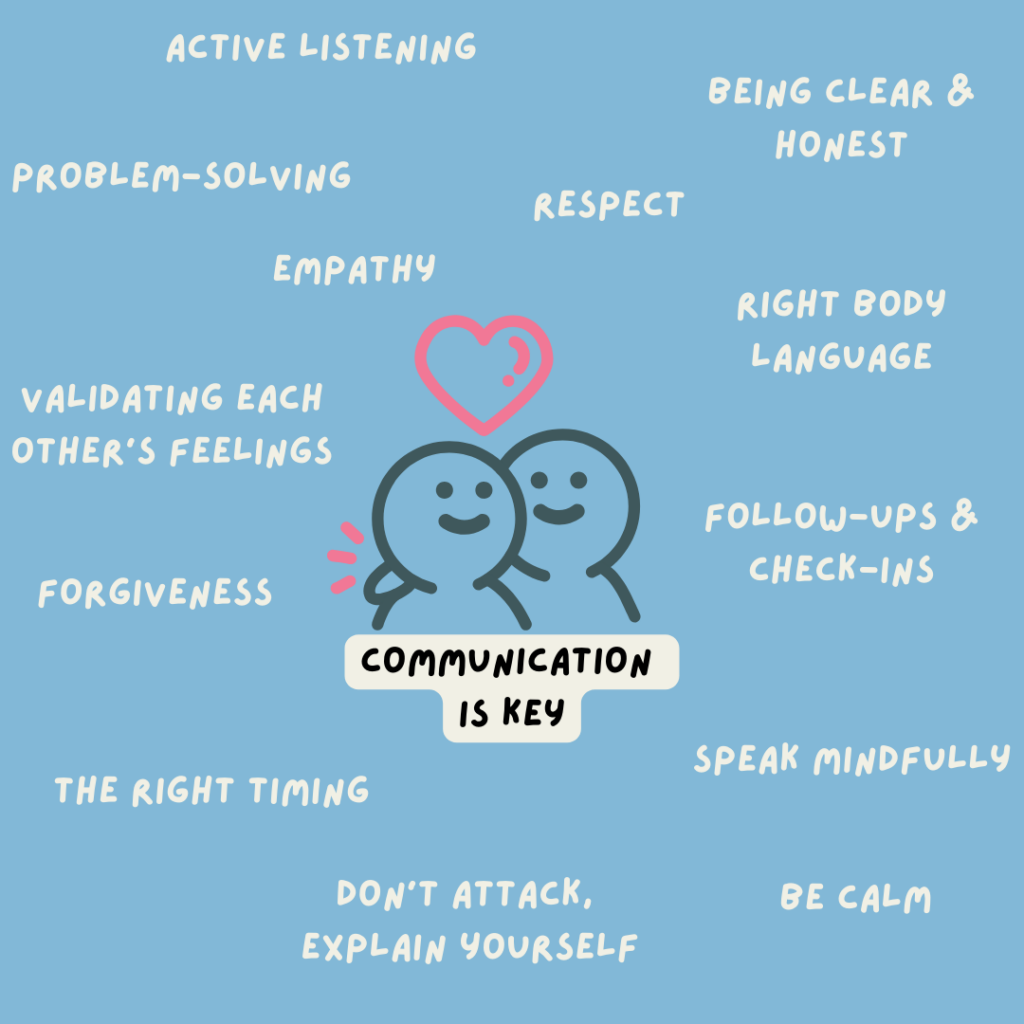
Table of Contents
The Role of Communication in Relationships
Communication in relationships involves more than just exchanging words. It involves the ability to share thoughts, feelings, and needs openly and honestly. Here are some key aspects:
- Active Listening: This is the art of fully concentrating, understanding, and responding thoughtfully to what the other person is saying and understanding what they are saying from their perspective. Try to understand their side of the story even if it feels hurtful to you. Active listening requires patience and empathy, showing that you value the other person’s perspective. Give your full attention to the speaker, and avoid interrupting. Show that you’re listening through nodding or verbal affirmations. You can also overdo the active listening part which for some people might feel overwhelming. Find that balance for yourself and if you are not sure if it’s okay, just ask.
- Clarity and Honesty: Clear and honest communication helps to prevent misunderstandings and misinterpretations. Being straightforward about your thoughts and feelings can foster trust and respect. Stop trying to prevent someone from hurting, because you will only end up hurting yourself. Be honest and just say how you feel and what you want and need. If you are not honest about something it will only end up hurting the both of you. You will also feel more anxious for not being honest and you might even get annoyed by the other one because they’re doing something you don’t like without them knowing that themselves; this will only build up the tension between the two of you.
- Non-Verbal Communication: Body language, facial expressions, and tone of voice play a crucial role in communication. These non-verbal cues can often convey more than words alone, and being mindful of them can enhance mutual understanding. Try not to make aggressive or sudden movements, this can make someone feel very uncomfortable. Just be calm.
- Speak Wisely: Think about what you want to say and what you want the other to understand. Don’t just blurt out all your thoughts, you might say something that the other one will think of as offensive or will misunderstand you. Be considerate about what you say. Try to improve what you say to someone, learn to get your message across and take your time for this.
- Empathy and Validation: Showing empathy involves recognizing and validating your partner’s feelings and experiences. It helps to bridge emotional gaps and shows that you are supportive and understanding. After all, you just want to understand each other better.
Essential Factors Supporting Effective Communication
While communication itself is vital, several other factors significantly impact its quality and effectiveness, learn how to communicate better:
- Emotional Intelligence: Being aware of and managing your own emotions, as well as recognizing and influencing the emotions of others, is crucial for effective communication. High emotional intelligence helps in responding to conversations with sensitivity and understanding.
- Trust and Safety: Trust is fundamental for open and honest communication. When both partners feel secure and valued, they are more likely to express their true thoughts and feelings without fear of judgment or retaliation.
- Respect: Mutual respect involves valuing each other’s opinions and boundaries. Respectful communication means listening without interrupting and addressing disagreements with consideration and fairness.
- Conflict Resolution Skills: Knowing how to handle conflicts constructively is essential. This involves staying calm, avoiding blame, and working together to find solutions. Effective conflict resolution helps to prevent issues from escalating and maintains the relationship’s health.
- Time and Attention: Prioritizing time for meaningful conversations and giving undivided attention during interactions are crucial. In our fast-paced lives, dedicating time to communicate without distractions demonstrates commitment and fosters stronger connections.
- Self-Awareness: Understanding your own communication style and how it affects your interactions can lead to more effective exchanges. Being aware of your triggers and how you express yourself helps in addressing any negative patterns. Manage your emotions and respond calmly, even during conflicts. Keeping emotions in check ensures that discussions remain productive and respectful.
- Adaptability: Being flexible and willing to adjust your communication style based on the context and the other person’s needs can improve interactions. Adaptability helps in addressing misunderstandings and finding common ground.
- Open-Mindedness: Be willing to consider the other person’s point of view, even if it differs from your own. An open-minded approach helps in finding common ground and resolving disagreements.
- Feedback: Provide and receive constructive feedback graciously. Feedback helps improve communication by addressing issues and reinforcing positive behaviors.
- Timing: Choose the right time and setting for important conversations. Timing can impact how your message is received and how effectively it’s communicated.
- Clarity and Conciseness: Express your thoughts and feelings in a clear and straightforward manner. Avoid vague language and be specific about what you want to communicate to minimize misunderstandings. Also avoid being too loud when angry, because your message will not get across and the anger will build up for both sides and there won’t be any real resolutions. Keep in mind that you also don’t understand something better when it’s being yelled to you.
Building a Stronger Connection
Building stronger connections can be quite hard. For me, these things have helped me make my connections stronger. Being mindful of the other one will make you feel as a better partner and you will automatically build a stronger connection. To enhance communication in your relationships, consider taking on these habits, which have helped for me:
- Regular Check-Ins: Make time to discuss how things are going in the relationship. Regular check-ins can help address minor issues before they become major problems. Ask each other what you can improve to make the other feel better in your relationship.
- Practice Forgiveness: Holding onto grudges or past hurts can obstruct clear communication. Practicing forgiveness and letting go of resentment can improve your ability to connect and communicate effectively.
- Follow-ups: When your partner tells you something that’s important to them (like something that hurt them, their favorite artist coming out with new music, their annoying cold that won’t go away) follow up about it a bit after. Make them feel heard, seen, and understood; do the efforts of giving them acknowledgment. After discussions or important conversations, follow up to ensure that any agreed-upon actions are being taken into action and that any remaining concerns are addressed.
12 tips for even better communication
- Don’t take it personally: When your loved one comes to you with a problem in your relationship with them, don’t take it personally. They are not saying they don’t like YOU, they’re saying they don’t like the situation/problem/something you said which you can just fix with the both of you by talking about it.
- Don’t be scared: Speak your mind, say what you want and need, and don’t be scared while doing so. If this really is the person for you then they are open to hearing what you have to say or what you need and want.
- Everyone’s different: We are all different people with different thoughts, beliefs, and values. Don’t forget that it is totally okay to not always be on the same page. Sometimes it is just better for both to just accept the fact that you are different and that you can’t think the same in every situation. Then it’s just better to accept this and move on.
- Fix it: If there really is something bothering your loved one or you and you address it to the other, then really try to fix it. Don’t just say I’m sorry I hurt you, but be mindful about it and change your actions.
- Take your time: when you want to say something that is important to you, take your time. Now, I don’t mean talking slowly, but be mindful about what, how, and when you are saying it. If you take your time your message will come across clearer.
- Be Patient: Allow the conversation to unfold naturally and avoid rushing or pressuring the other person to respond quickly.
- Practice Active Engagement: Demonstrate that you are engaged by summarizing what the other person has said or reflecting back on their points to confirm understanding. Also put away your phone to ensure that you are focused on the person you are with.
- Don’t talk about your problems within your relationships with everyone, because they are not in the relationship, you are. They don’t really know the way your relationship is and how you act and communicate with each other. In this way, their advice is probably not the best, because they don’t have a correct insight.
- Use “I” Statements: Express your thoughts and feelings using “I” statements (e.g., “I feel…”), which can help avoid sounding accusatory and reduce defensiveness.
- Ask Questions: If something is unclear, ask questions to ensure you fully understand the other person’s point of view. Also just ask it if you are unsure of what the other one wants. This also shows you really want to understand the other person which will make them feel heard and seen.
- Provide Constructive Feedback: When giving feedback, be specific, positive, and offer suggestions for improvement rather than just criticism.
- Clarify and Summarize: At the end of a conversation, briefly summarize the key points to ensure mutual understanding and agreement.
Implementing these tips can greatly enhance the quality of your interactions and help build stronger, more effective relationships.
Effective communication is indeed a vital element of any strong relationship, but it thrives within a framework of trust, respect, and emotional understanding. By focusing on these supportive factors and actively working to enhance your communication skills, you can build deeper, more meaningful connections with those you care about. Relationships, like any skill, benefit from ongoing effort and awareness, and investing in these aspects can lead to richer and more fulfilling interactions. Remember, learning and taking on all these things take time and effort and that’s okay. To Flourish is to Struggle.
With love,
CECA
C’est ca ~ That’s it
If you want to work on your self-love, click here.
If you want to work on your self-compassion, click here.
Seek Professional Guidance: If communication issues persist, seeking help from a relationship counselor or therapist can provide valuable insights and strategies for improvement.